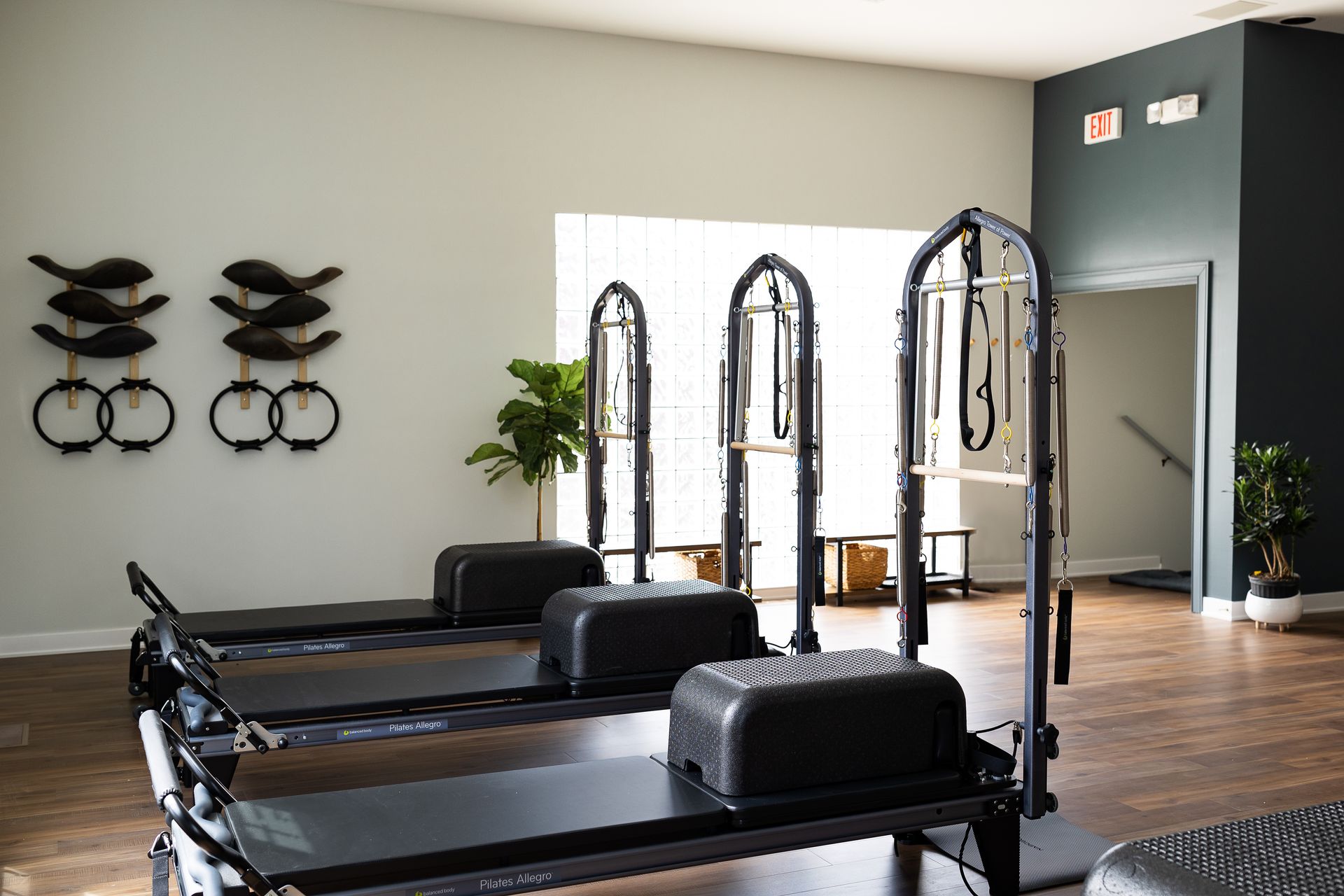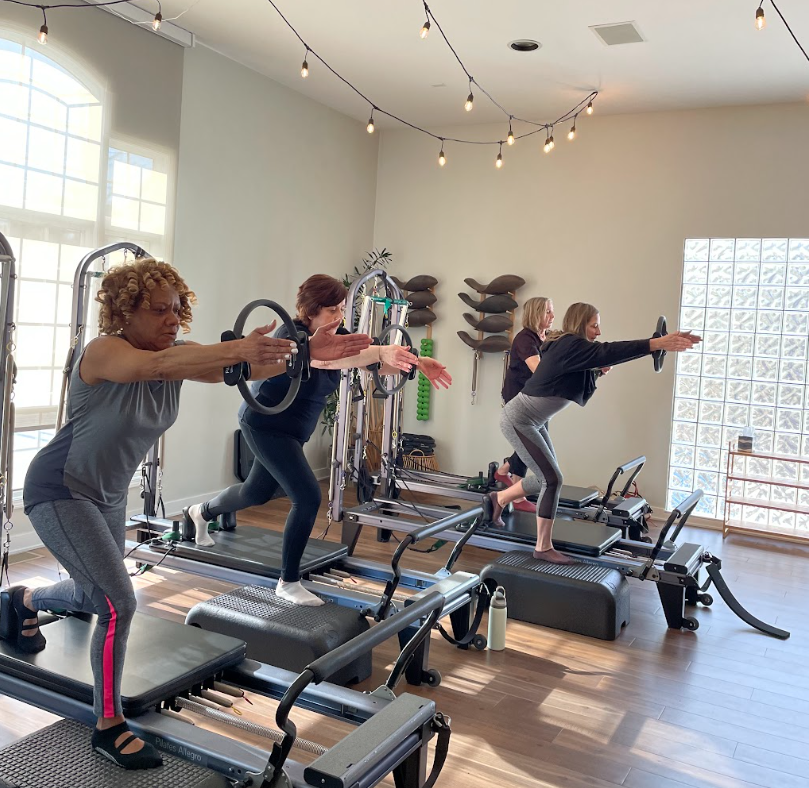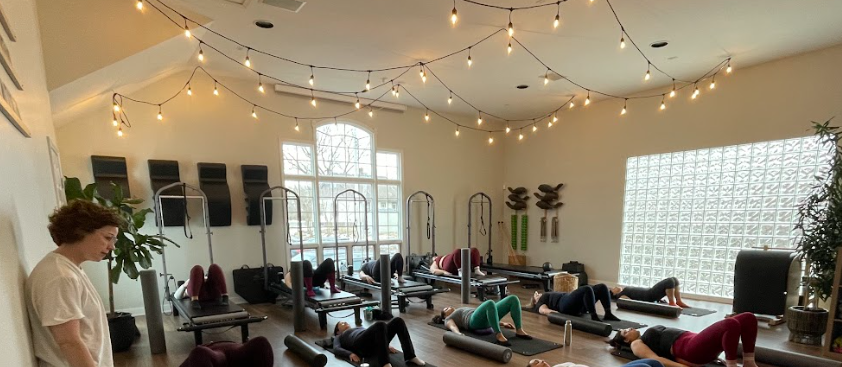
Mat Pilates: The Foundation For Movement And Mobility
Why the classical Pilates mat sequence is an important place to begin — and why modifications make it available to all.
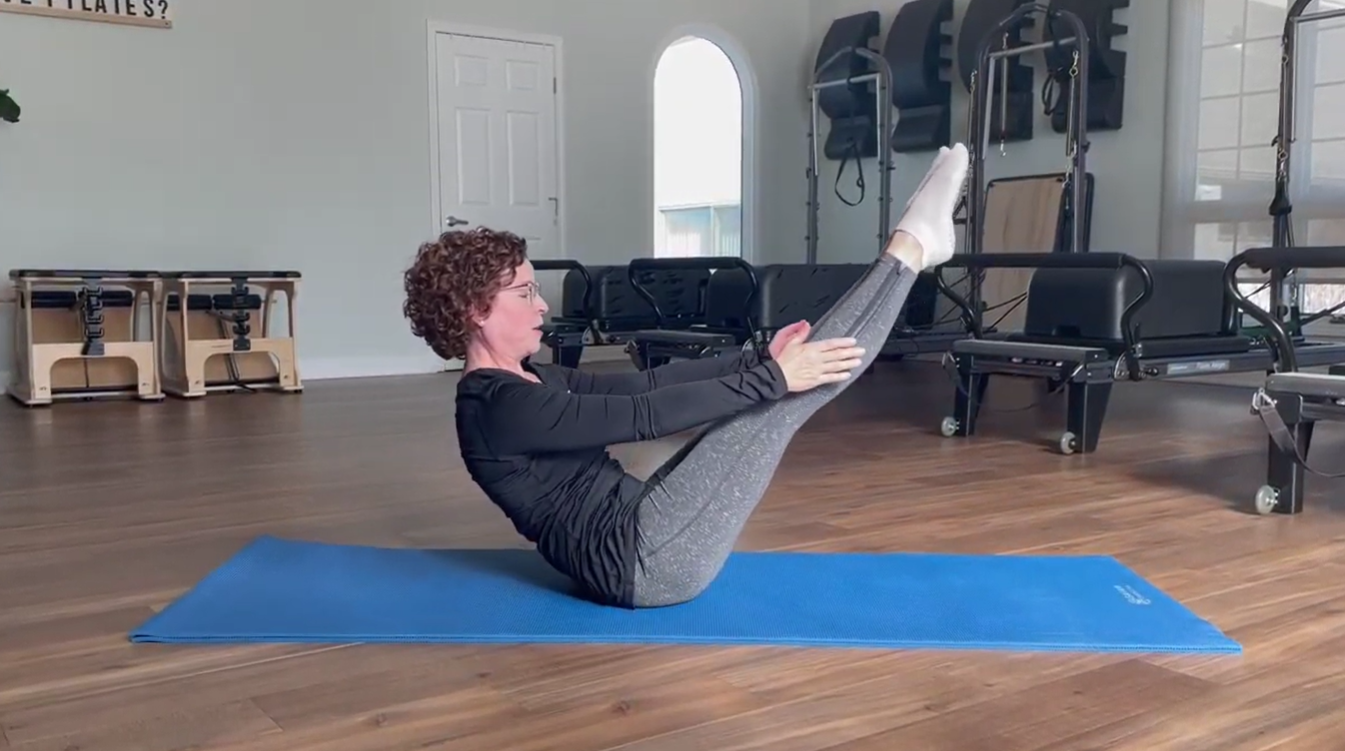
Before the reformer, before the Cadillac, before any of the specialized equipment that fills modern Pilates studios — there was the mat. A firm exercise surface, similar in size to a yoga mat but often slightly thicker for joint support. On this simple foundation, Joseph Pilates built the most complete and progressive sequence of exercises in the history of movement training. Understanding why the mat is where classical Pilates begins, and why learning to perform these exercises correctly is so valuable, is central to understanding the entire method.
The Mat as the First Expression of the Method
Joseph Pilates first developed his exercises without equipment — using only the floor, body weight, and breath. The mat sequence, often called the original 34 mat exercises, represents what many consider his philosophy: that the human body, when trained with intelligence and intention, contains everything it needs to become strong, flexible, and coordinated. This matters because it means the most important work in classical Pilates requires nothing more than a mat and the willingness to learn. No gym membership. No expensive equipment. Just a student, a teacher, and the floor — which is exactly how the method was meant to be taught.
Why Mat Work Builds Genuine Core Strength
The term 'core strength' is widely used and often poorly understood. In classical Pilates, the core — often called the “powerhouse” — encompasses the deep muscles of the abdomen, spine, pelvis, and hips. These muscles are not primarily responsible for moving the body; they are responsible for stabilizing it. And without stability, no movement is truly efficient or safe.
"The principle of stabilization and axial elongation is thoroughly integrated into all Pilates exercises... thought to organize the spine in its optimal orientation for efficient movement, thus avoiding undue stresses on the structures of the trunk and extremities." — Muscles, Ligaments and Tendons Journal, 2012
What makes mat work effective for core development is its use of body weight. Without springs or straps to assist or support the body, the stabilizing muscles must do their full share of the work. A systematic review published in the journal Healthcare (2023) found emerging evidence that Pilates can assist people with chronic low back pain to increase the strength of their core muscles around the trunk, pelvis, and abdomen — with mat-based Pilates producing meaningful improvements even without equipment.
The 10 Foundational Mat Exercises — and What They Train
The classical mat sequence progresses systematically — each exercise building on the strength and awareness developed in the one before it.
For a review or to see these classical mat Pilates exercises, visit Mat Pilates Exercises
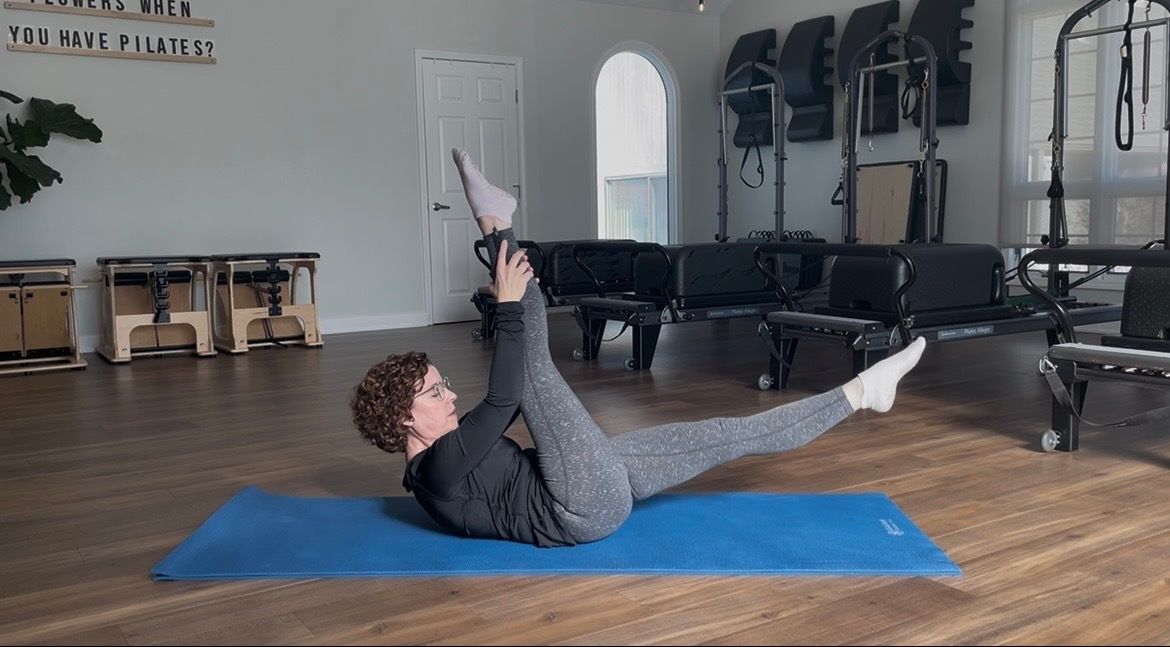
Here we are highlighting ten exercises that is thought to cover the entire spectrum of movement the body needs:
- The Hundred: Activates the deep core through sustained muscular effort while coordinating with breath. Research on EMG (electromyography) activity confirms high levels of abdominal muscle activation throughout this exercise.
- The Roll Up: Articulates each vertebra individually, training both spinal mobility and the eccentric control of the abdominals.
- Single Leg Circles: Trains hip joint mobility while the pelvis remains stable — directly targeting the stabilizer-mobilizer relationship that underlies healthy walking and running mechanics.
- Rolling Like a Ball: Massages the entire spine through compression and release, and teaches the student to maintain a rounded, controlled spinal shape — a key motor pattern for injury prevention.
- Single and Double Leg Stretch: Coordinates deep abdominal engagement with limb movement — training the core to stabilize the spine under constant load.
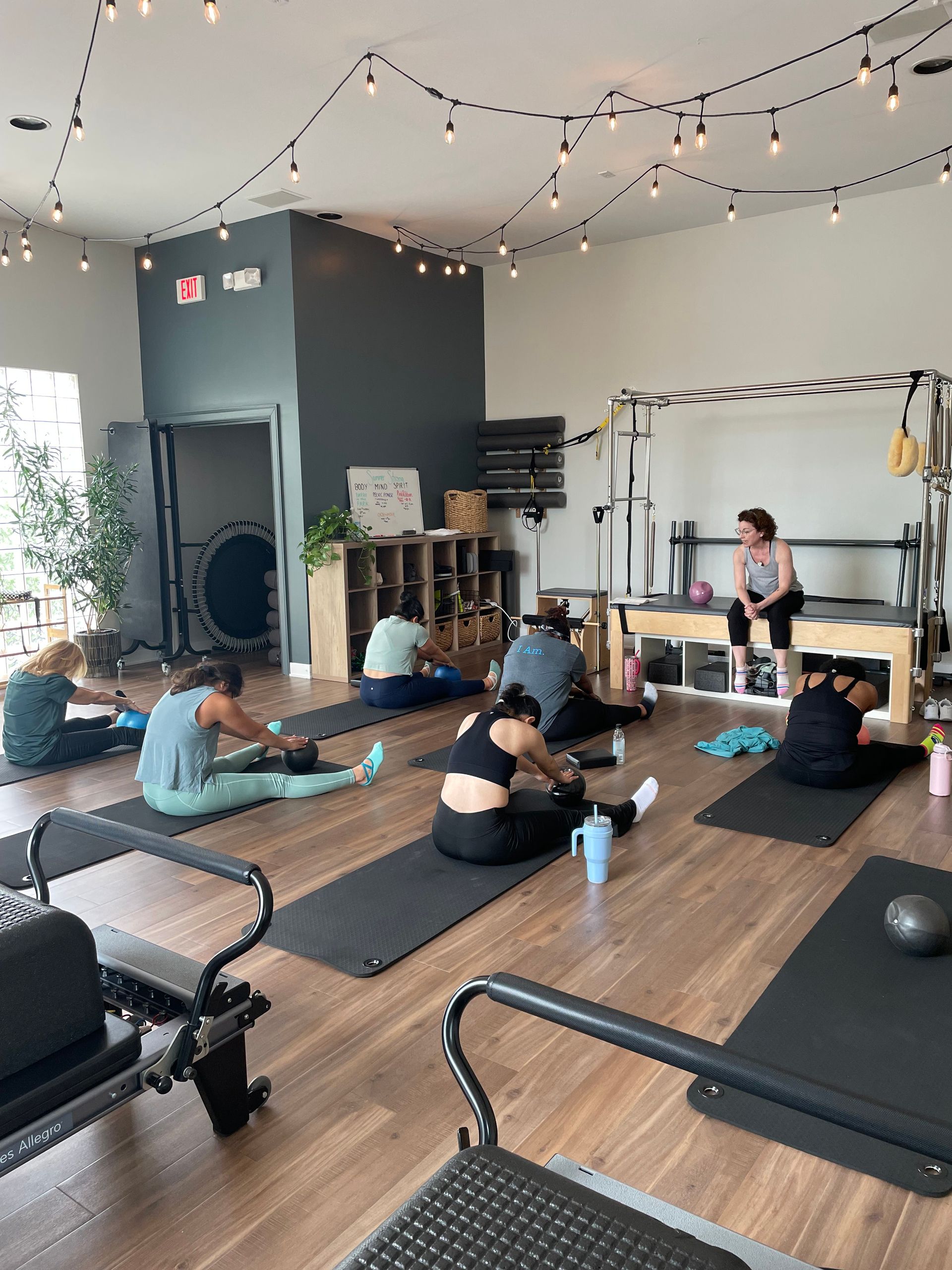
- Spine Stretch Forward: Lengthens the posterior chain while teaching active spinal elongation — essential for posture correction and lower back health.
- Swan: Trains spinal extension and back extensor strength — critical for postural control and balance in life that demands constant forward flexion.
- Leg Pull Front: A full-body stabilizing exercise challenging shoulder girdle strength, core endurance, and posterior chain engagement simultaneously.
- Side Kicks: Develops hip stability and glute strength in the frontal plane — improving balance, gait mechanics, and lateral movement control.
The Essential Role of Modifications
One of the most important and frequently misunderstood aspects of classical Pilates is the role of modifications. In the classical tradition, modifications are not a beginner's shortcut or a lesser version of the exercise. They are the appropriate version of the exercise for a specific body in a specific condition — and they are as integral to the method as the advanced form. Modifications exist within the system because the system was designed to serve all bodies.
Common modifications include reducing the range of motion for students with spinal sensitivity, keeping knees bent for those with hamstring tightness, supporting the head and neck for students who experience cervical strain, and using seated or side-lying variations for students recovering from joint replacement or surgery. In each case, the fundamental movement pattern — and its neurological and muscular benefits — is preserved.
Accessibility Is Not a Compromise
Research published in the Bulletin of Faculty of Physical Therapy (2023) reviewing Pilates interventions across multiple clinical populations confirmed that Pilates can increase flexibility, strength, mobility, and balance regardless of a participant's starting point. The mat exercises, properly modified and progressively taught, are genuinely accessible to people across a wide range of ages, fitness levels, and physical conditions. This is perhaps the most powerful thing about the mat: it is both humble and sophisticated at once. A beginner can start here. An advanced practitioner can return here for the rest of their life and continue to find depth, challenge, and refinement. The mat is not the starting gate before the real work begins — it is the real work.
SOURCES
1. Wells, C. et al. (2012). Pilates: how does it work and who needs it? Muscles, Ligaments and Tendons Journal. PMC3666467
2. Alves, M.C. et al. (2023). Pilates to Improve Core Muscle Activation in Chronic Low Back Pain: A Systematic Review. Healthcare, 11(10). PMC10218154
3. Kim, H.S. et al. (2024). Comparisons of functional movements and core muscle activity in women according to Pilates proficiency. Frontiers in Physiology. doi:10.3389/fphys.2024.1435671
4. Yousef, A.M. et al. (2023). Effects of Pilates on health and well-being of women: a systematic review. Bulletin of Faculty of Physical Therapy. doi:10.1186/s43161-023-00128-9
5. Kloubec, J.A. (2010). Pilates for improvement of muscle endurance, flexibility, balance, and posture. J Strength Cond Res, 24(3), 661–667. PMID: 20145572