Can Pilates Strength Training Transform Your Workout
Is Pilates A Type Of Strength Training?
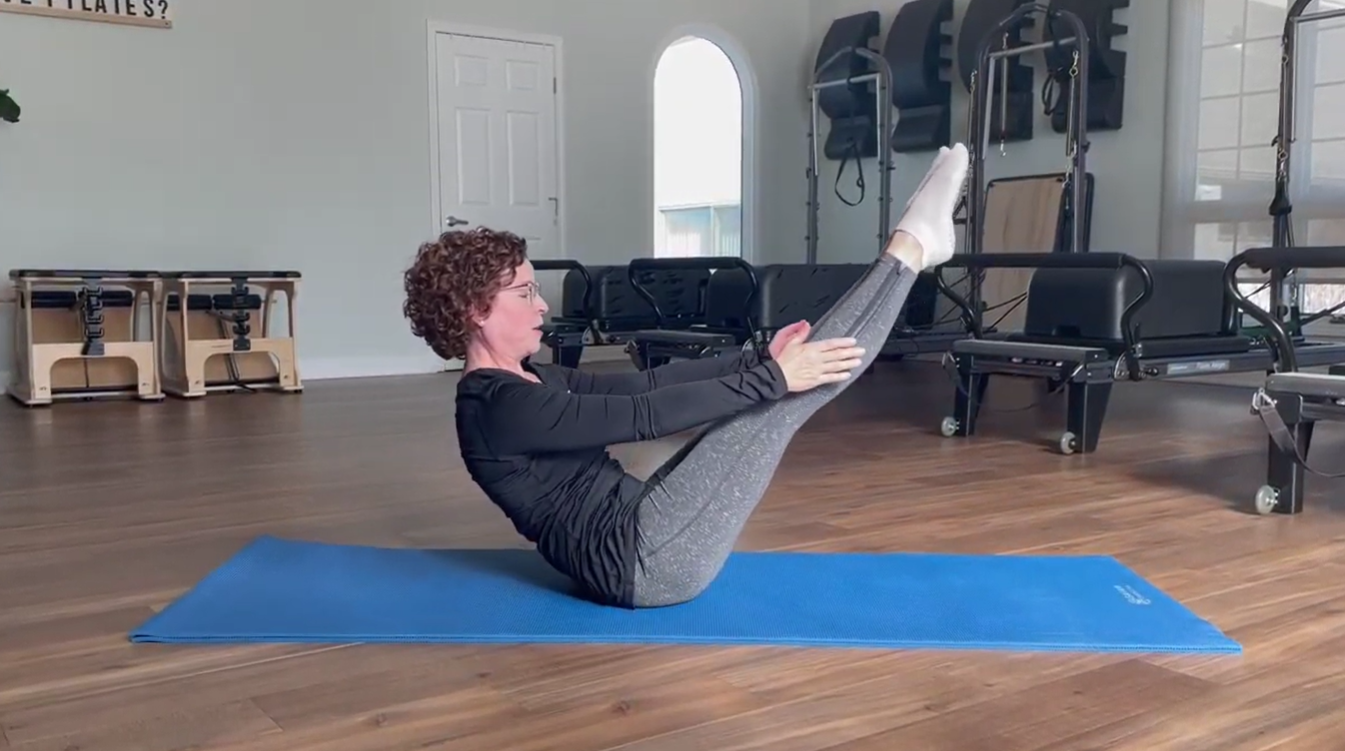
Any search on just about every social platform currently features a variety of Pilates equipment, movements, and exercises. There is also an abundance of information related to the do's and don'ts of strength training, including the type of weights being used, when the best time to lift is, and weight load for age/weight. What has begun to also surface is the correlation between strength training and Pilates. While many critics tout the phrase "doing only Pilates movement is not enough", there are many who disagree. We break down the ability of using the reformer to condition and talk about Pilates and strength training.
How Pilates Strength Training Helps Your Workout
For years, reformer Pilates has lived in a strange in-between category. It's too controlled and precise to be dismissed as "just stretching," but it's often not taken seriously by the strength-and-conditioning crowd either — filed away as a low-impact recovery activity or a "toning" class for people who don't want to lift weights. Many tend to feel that reputation is truly outdated. So is Pilates strength training, or is it just an elaborate stretch session? The research on reformer Pilates over the past few years shows measurable gains in muscular strength, endurance, and trunk stability, and when the equipment is used deliberately — with attention to spring resistance, tempo, and progression — it can start to look a lot less like a regular class and a lot more like a genuine strength-training modality.
The catch is that word "deliberately." Reformer Pilates
can function as strength training, but it doesn't automatically do so just because you're pushing against springs. Whether a session builds real
Pilates strength or simply maintains general fitness depends almost entirely on how it's programmed — and whether it's fair to say Pilates and strength training are the same thing, or just close cousins, is really a question of intent and progression rather than equipment.
What the Reformer Actually Does Mechanically
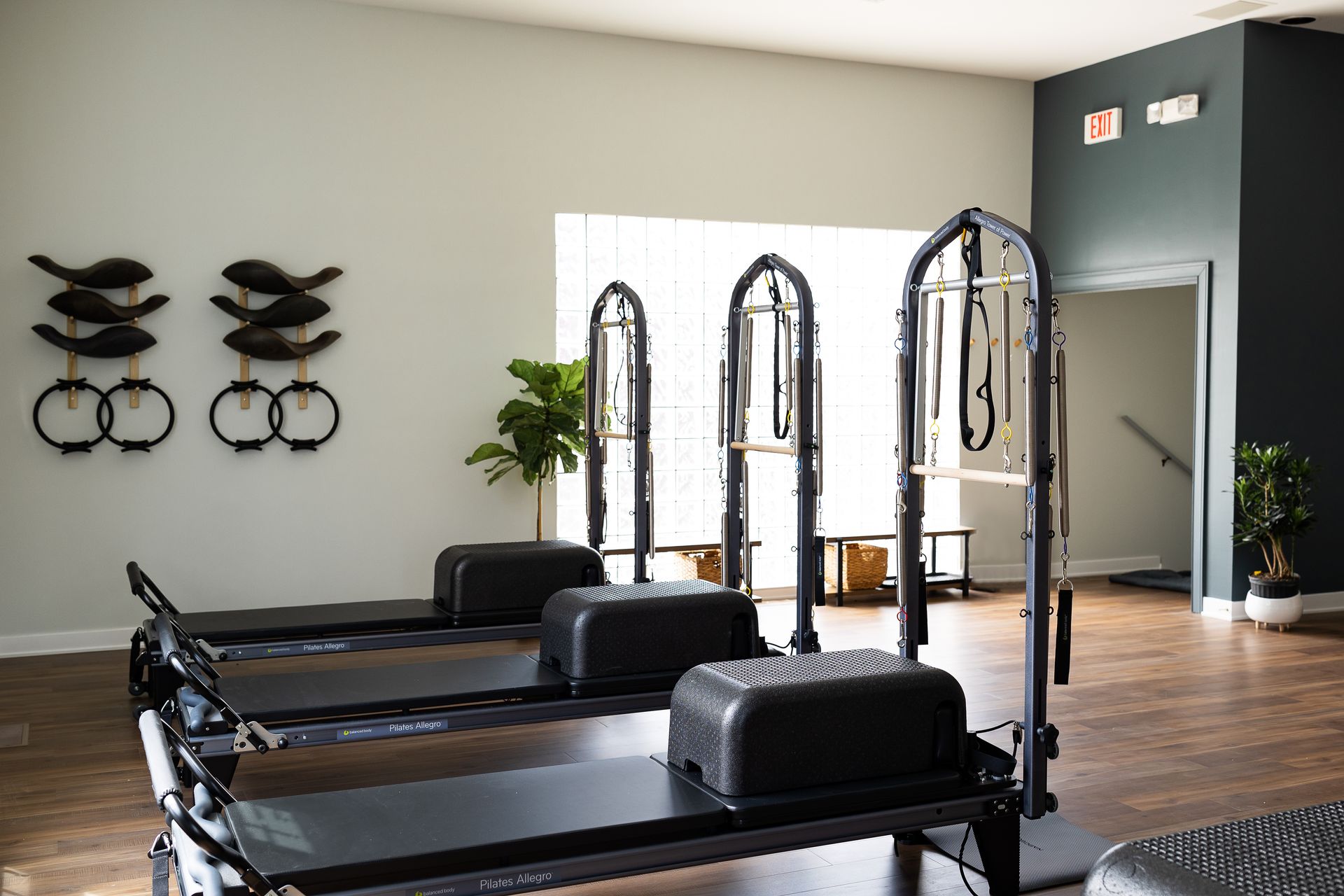
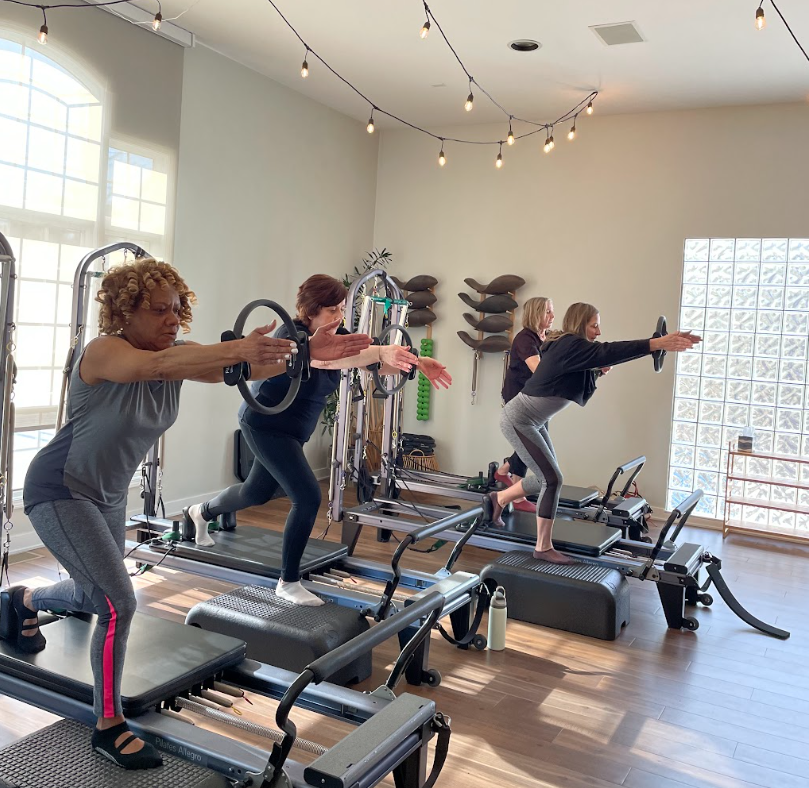
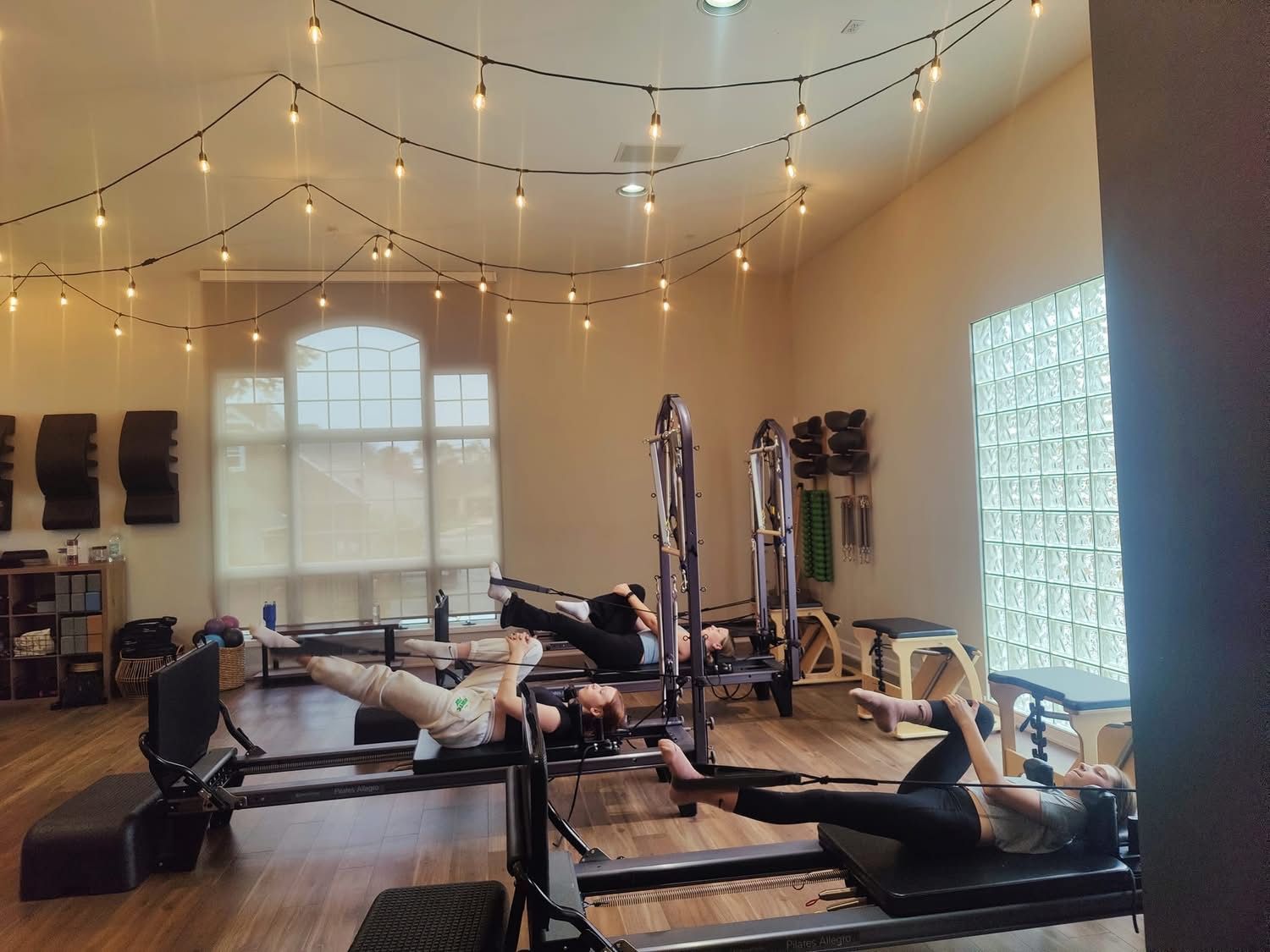
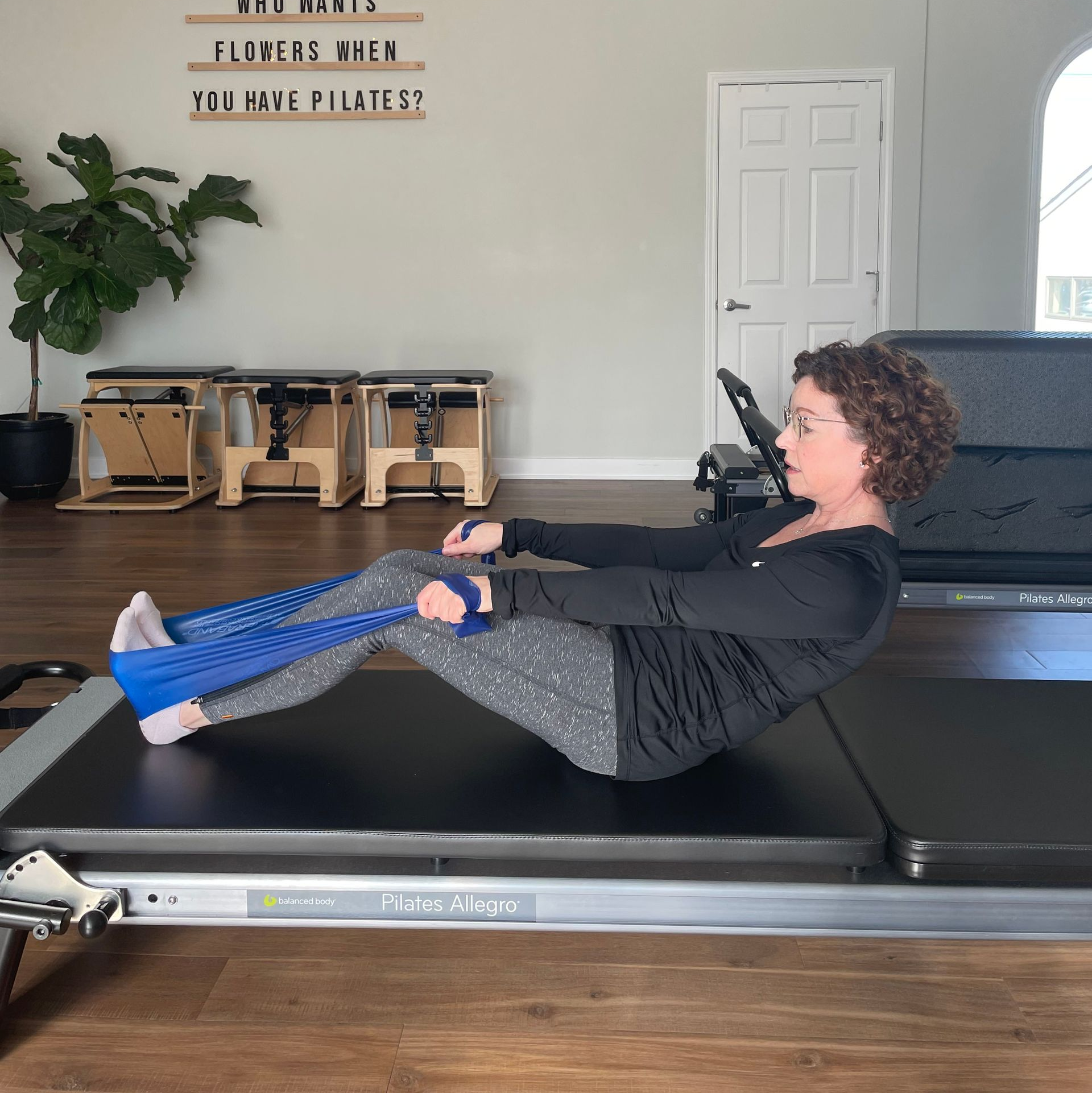
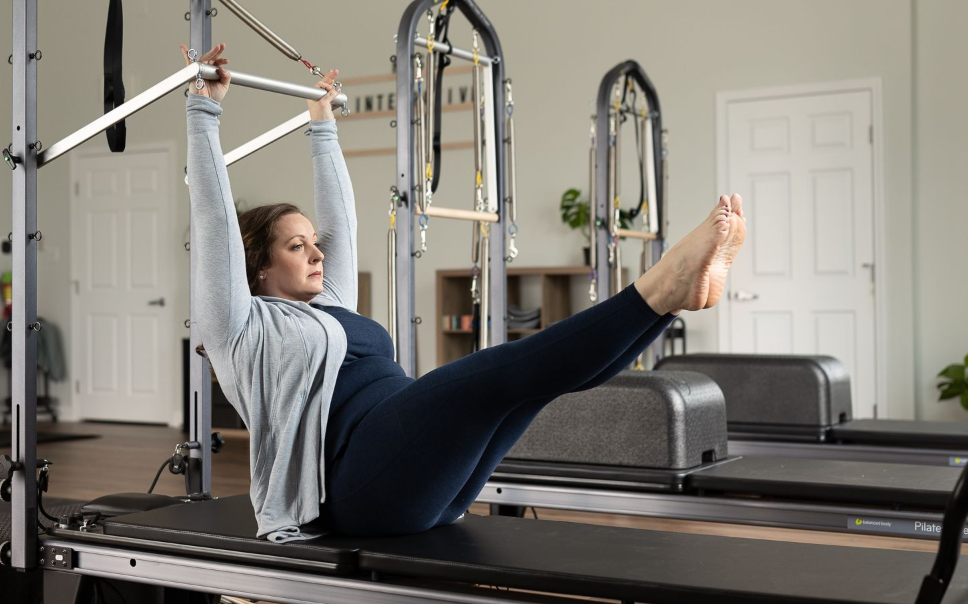
The reformer is a sliding carriage attached to a set of springs, straps, and a foot bar. Unlike a mat class, where your own body weight is the only resistance available, the reformer introduces variable, adjustable external load — which is the basic ingredient any strength program needs. Most reformer work involves pushing or pulling the carriage, or resisting it as the springs pull back, and that motion recruits several muscle groups at once, especially through the core as the platform is pushed or pulled, or held steady against the pull of the springs, engaging several muscles, particularly the core.
That last point is worth pausing on, because it's the mechanical reason reformer work can double as strength training: the springs create genuine resistance, not just guided range of motion. And resistance is the raw material of strength adaptation.
Is Pilates Considered Strength Training? What the Evidence Says
Whether Pilates strength training counts as "real" strength training is a fair question, and it's one researchers have started to actually test rather than debate anecdotally. The clearest recent data point comes from a 2025 randomized controlled trial published in Scientific Reports, which looked at 47 overweight and obese women, aged 30–60, split into a Reformer Pilates group and a control group. The group trained three times a week for eight weeks using Reformer Pilates exercises, with outcomes measured across body composition, strength, endurance, and psychosomatic parameters. The results were notable: the study found large effect sizes for BMI, upper extremity muscle strength, trunk flexor strength, back strength, and lateral bridge performance after the eight-week program, with the researchers concluding that Reformer Pilates produced strong, clinically significant effects, particularly on BMI, upper extremity strength, and endurance.
This isn't an isolated result. A separate line of research on chronic conditions found something similar: a comparison of Mat Pilates and Reformer Pilates in patients with multiple sclerosis showed both approaches improved core strength, mobility, balance, and quality of life, but Reformer Pilates produced significantly greater gains in trunk muscle strength than Mat Pilates did. That's a meaningful distinction — it suggests the added resistance of the reformer isn't just a nice-to-have; it's doing measurably more work on the muscles than bodyweight-only Pilates.
Reformer training also shows up favorably in sport-specific strength research. A study of Latin dancers who completed a 12-week Pilates Reformer program found significant improvements in lower-limb strength in both legs, with the researchers linking this to the reformer's ability to load muscles like the inner thigh through controlled ranges of motion, which strengthens the muscles used to draw the leg toward the body's centerline. Similarly, a
2014 study in the
Journal of Strength and Conditioning Research on amateur soccer players found that ten weeks of Pilates reformer training produced significant improvements in hamstring flexibility and hip range of motion, outperforming a standard static-stretching protocol. Researchers attributed this to the reformer's capacity to strengthen muscles at the end of their range of motion rather than simply stretching them passively — which is a strength-training mechanism,
not a flexibility one.
A more skeptical,
evidence-focused review published by Medscape this year — one that's careful to note where Pilates research is thin — concedes the core finding:
current evidence confirms Reformer Pilates offers real benefits, improving mobility, balance, and muscle strength, particularly in the core and upper extremities. Its caveat is important and worth being honest about: when Reformer Pilates is compared directly against general resistance training programs, statistical significance often disappears. In other words, reformer Pilates reliably beats doing nothing. Whether it beats a well-designed barbell program is a separate, harder question — and that's exactly where the "modification" conversation becomes relevant.
Why the Springs Behave Differently From a Dumbbell
Here's where reformer training gets mechanically interesting, and where most people misunderstand how to use it for strength. On a leg press machine or with a barbell, more resistance is straightforwardly harder. On the reformer, the relationship is more nuanced. Research on the equipment's resistance mechanics has found that in many pushing and pulling movements, reducing spring tension can actually increase the difficulty, because a lighter carriage moves more freely and becomes harder to control reducing spring resistance increases the stabilization challenge because the carriage becomes easier to move and harder to control, while heavier springs can instead assist certain exercises.
This is a genuinely different loading paradigm than free weights, and it's part of why reformer work builds a specific kind of strength — the kind rooted in stabilization, control, and eccentric management — alongside straightforward concentric force production. It also means instructors and practitioners have two separate levers to manipulate difficulty: spring tension and the neuromuscular demand of controlling an unstable, low-friction carriage. Used skillfully, both are legitimate progressive-overload tools.
The Progressive Overload Question
This is the crux of the question: Does Pilates count as strength training, or is it just resistance-flavored mobility work?
Strength and conditioning research is fairly unified on this point: muscles adapt — get stronger and larger — when they're required to do progressively more work over time. That can mean more external load, but it doesn't have to. A 2022 trial comparing two eight-week resistance programs, one that progressed by adding weight and one that progressed by adding repetitions while holding load constant, found that both approaches were viable strategies for driving muscular adaptation, giving trainees flexibility in how they build overload into a program.
That finding matters directly for reformer Pilates, because it opens up more than one path to making a session count as strength training rather than maintenance work:
- Increasing spring resistance over successive sessions or blocks, the most direct analog to adding weight to a bar.
- Increasing repetitions or time under tension at a given resistance, consistent with the load-vs-reps research showing rep progression alone can drive real adaptation.
- Reducing spring assistance to shift more of the control burden onto the working muscles, which increases the stabilization demand described above.
- Slowing tempo, particularly on the eccentric (lengthening) phase, to increase time under tension without changing the springs at all.
- Reducing external assistance from straps or bars, forcing the trunk and limbs to control the carriage unassisted.
None of this happens by default in a standard reformer class, which is typically built around variety, flow, and full-body movement rather than systematic loading of a specific muscle group across weeks. That's a legitimate design choice for a general fitness or mobility-focused class. But it's also exactly why so much of the research draws a line between reformer Pilates as
practiced casually and reformer Pilates as
programmed for strength.
Specific Examples: What "Modified for Strength" Looks Like
A few concrete illustrations make this less abstract:
Footwork on the carriage. In a typical class, footwork is done with moderate springs for a set number of reps as a warm-up. Modified for strength, the same exercise is done with heavier springs, slower tempo (a 3–4 second push, 3–4 second return), and fewer, harder reps taken close to muscular fatigue — closer in spirit to a leg-press protocol than a warm-up.
Long Stretch / Elephant series. These plank-based, carriage-pushing exercises already demand significant shoulder, core, and hip strength. Increasing resistance and slowing the eccentric phase turns them into legitimate loaded core and upper-body work rather than a stability drill.
Single-leg or single-arm work. Removing the second point of contact (one leg on the bar, one arm pulling a strap) increases the stabilization and force-production demand on the working limb substantially — a reformer analog to unilateral dumbbell training, which is well established in strength literature for addressing asymmetries.
Reduced-spring control work. Rather than using a stronger spring, using a very light spring on exercises like the Reformer squat or bridge forces the trunk and hip stabilizers to control an unstable carriage, targeting the "control" side of strength that the mechanics research highlighted reducing spring resistance increases the stabilization challenge because the carriage becomes easier to move and harder to control — a very different stimulus than simply adding weight, but a strength stimulus nonetheless.
Where the Honest Line Sits
It would be overselling the research to claim reformer Pilates is a wholesale substitute for barbell training or that it drives hypertrophy at the same rate as high-load resistance training. It doesn't, and the studies that compare it head-to-head with general resistance training are honest about that gap. Where reformer Pilates earns its place in a strength-and-conditioning context is in three specific roles: as an entry point into resistance training for people who find barbells intimidating or joint-stressful, as a tool for building the stabilization and control strength that heavier lifting often neglects, and — when deliberately loaded and progressed — as a legitimate strength stimulus in its own right, particularly for the trunk, hips, and upper body.
The equipment isn't the limiting factor.
The programming is. A reformer class run as a flowing, variety-driven flexibility session will train mobility and light muscular endurance, and that's a fine goal. The same equipment, run with attention to spring resistance, tempo, unilateral loading, and progression across weeks, produces the strength and endurance outcomes documented in the research above. The springs don't care which approach you take. The results do.
Pilates vs. Strength Training: Where They Overlap and Where They Don't
It's worth addressing the Pilates vs strength training comparison directly, because the two are often framed as competitors when they're better understood as overlapping tools with different defaults. Traditional strength training — barbells, dumbbells, machines — is built around a straightforward, linear form of overload: add weight, add reps, or add sets over time, and track a number that goes up. Reformer Pilates can absolutely do the same thing, but its defaults skew differently. Classes are usually built for variety and flow rather than a single lift progressing week over week, and the resistance itself behaves less predictably than a fixed weight, as the spring mechanics discussed above make clear.
That doesn't make reformer work a lesser form of strength training so much as a different dialect of it — one that layers stabilization, control, and range-of-motion demands on top of the resistance itself. For someone choosing between the two, or deciding how to combine
Pilates and strength training in the same week, the practical answer is that they solve different problems well: barbells and machines are the more efficient route to maximal strength and hypertrophy, while a deliberately loaded reformer session builds the kind of trunk stability, joint control, and end-range strength that heavier lifting often skips over.
Practical Takeaways
If you're weighing reformer Pilates against a traditional strength program, or wondering whether to fold it into one you already run, a few practical points fall out of the research above:
Track something. The studies that found meaningful strength gains — grip strength, back dynamometer readings, trunk flexor endurance — all involved measuring a baseline and reassessing after a defined block, typically six to eight weeks. Most reformer classes don't build in this kind of tracking, which means it's easy to plateau without noticing. If strength is the goal, note your spring settings, reps, and tempo for key exercises and revisit them monthly, the same way a lifter would track a working weight on squats.
Treat spring level as your primary training variable, not an afterthought. It's common in group classes to leave springs at a comfortable, moderate setting for the whole session because that's what keeps the flow smooth. That's a reasonable choice for a general class, but it caps how much strength adaptation is actually happening. Deliberately cycling between heavier springs for lower-rep, higher-control work and lighter springs for stabilization-focused work gives you two distinct training stimuli instead of one flat one.
Don't ignore the eccentric phase. Several of the mechanisms described in the research — end-range strengthening, control of an unstable carriage, time under tension — depend on what happens as the carriage
returns, not just as it's pushed away. Rushing the return phase, which is easy to do in a fast-paced class, likely blunts a meaningful part of the strength stimulus.
Pair it with, rather than replace, heavy compound lifting if hypertrophy or maximal strength is the primary goal. The research is consistent that reformer Pilates reliably beats inactivity and can match or exceed mat-based Pilates for strength outcomes, but it hasn't been shown to outperform structured resistance training with progressively heavier external load. For general population goals — functional strength, core stability, injury resilience, balance — reformer work on its own is well supported. For maximal strength or significant hypertrophy goals, it's better understood as a complement to barbell or machine-based training, not a replacement for it.
The Bottom Line: "It's Reformer Pilates And..."
Reformer Pilates sits at an unusual intersection: it has the biomechanical ingredients of strength training — external, adjustable resistance, controlled ranges of motion, the ability to manipulate tempo and load — but it's most often delivered in a format optimized for flow and variety rather than progressive overload. Research continues to show that when the format shifts toward deliberate loading, the outcomes shift with it: measurable gains in trunk, back, and upper-extremity strength; improved muscular endurance; and functional carryover into sport-specific strength, as seen in the dancer and soccer-player studies.
Ultimately, pairing reformer Pilates with a separate weight training program is more beneficial. And ultimately, it should always be "Pilates and (something else)." What is Pilates enabling you to do? That is not to say the precision, the breath work, the emphasis on control cannot aid or help with, or focus on, strength training. It just requires programming those qualities with the same intentionality a strength coach would bring to a barbell program. Do that, and the reformer stops being an accessory to strength training and can become a form of it. To learn more about incorporating a strength-training emphasis into your Pilates practice, meet with one of our instructors or join our INTEGRATE & Strength class at Rise.